
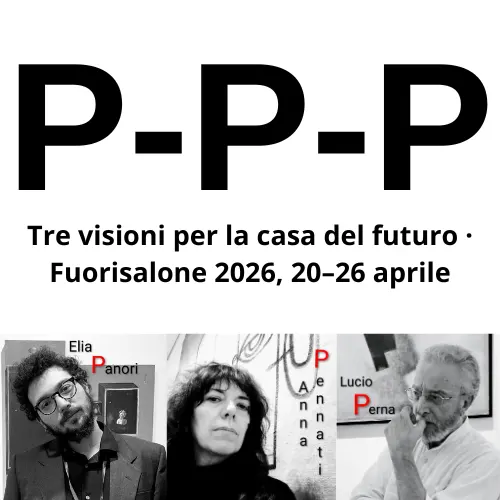
To mark the Milan Design Week 2026, Almach Art Gallery presents P–P–P, a conceptual exhibition that reimagines domestic space through the visions of three artists: Elia Panori, Anna Pennati and Lucio Perna. The home not as a static container, but as a living entity that evolves with its inhabitants.
Home as a stage
LUCIO PERNA
Movable floors, retractable walls and modular furnishings that adapt to the moods of the occupants. Every resident becomes the director of their own daily life.
An unusual home with surreal overtones, yet one that must still meet the needs of those who spend most of their lives there, could be conceived as a ‘stage’.
In short, a space that can adapt to specific needs, without fixed, structured areas, but offering complete versatility.
Just as on stage the sets change in every way to suit the dramatic requirements of the script, so too in a surreal home the spaces should be adaptable to the needs, interests and even the moods of its occupants.
I won’t be addressing the engineering or architectural issues involved in this idea, as that is not my responsibility.
The concept focuses exclusively on the aesthetic aspect – that is, functionality, beauty and external form – in other words, the way in which it is perceived visually and sensorially. The elements to be utilised will therefore be: choice of colours, lines, textures and proportions, which influence the realm of emotions and well-being.
The floor levels will be adjustable both in height and orientation, and will not necessarily all be at the same level.
Just like on a stage, they can be raised or lowered as required.
The walls or partition walls, even those already fitted with built-in features (bookcases, seating, worktops), will also be movable and/or retractable so that they can be combined and positioned according to the circumstances and needs of the occupants.
Essentially, each space can be designed on a case-by-case basis (with the possible exception of those rooms which, for technical reasons, require fixed installations such as drainage and/or specific electrical and ventilation connections. I am referring in particular to bathrooms and kitchens).
The home would thus become a private stage, equipped with advanced technology, on which each person acts out their daily life, drawing on their imagination as if they were the set designer of their own existence
|
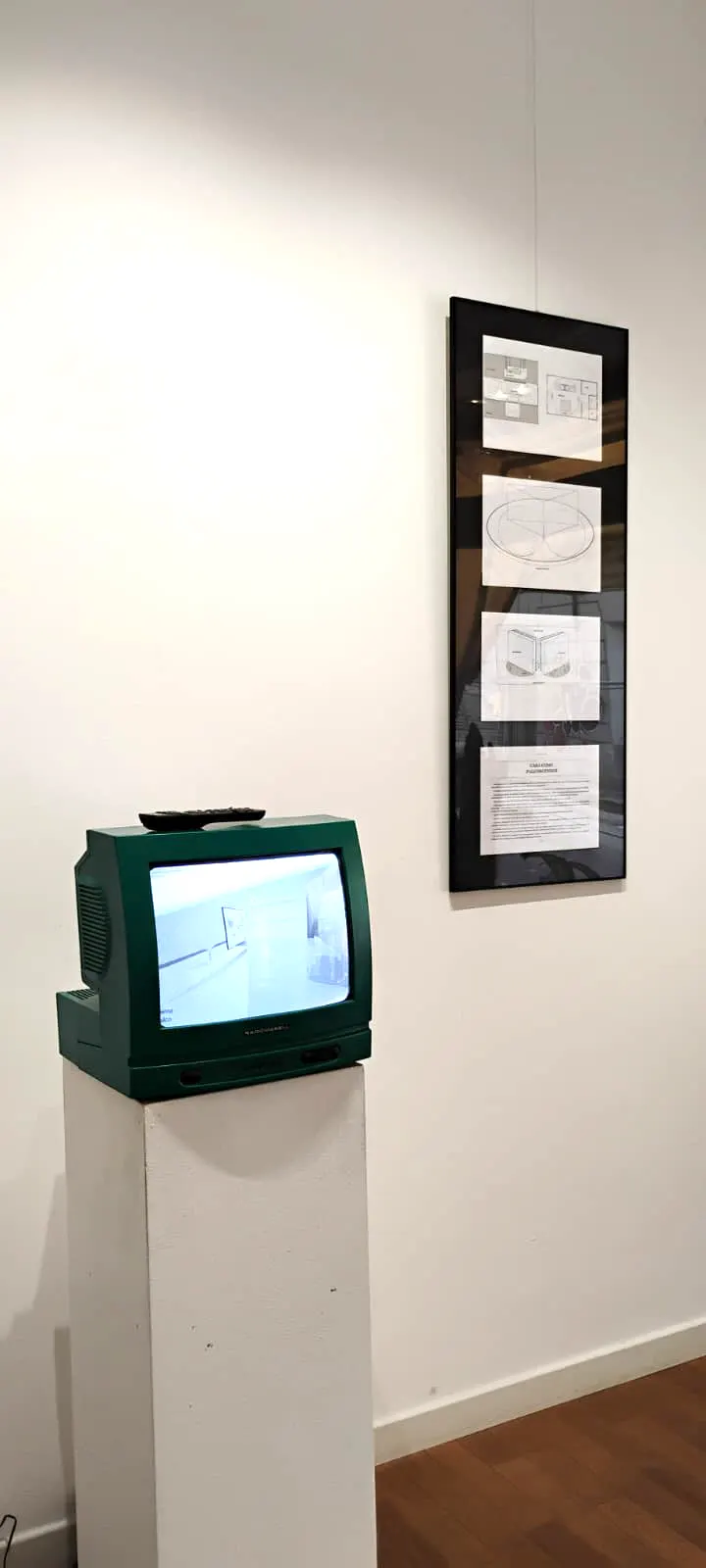
Espacio ANNA PENNATI Inspired by the poetry of Borges, a ‘palingenetic house’ featuring a reading nook shaped like an open book. A sanctuary for intellectual nourishment, natural light and profound personal renewal. |
The idea for this project came to me after reading a poem by Jorge Luis Borges: ‘El enamorado’. I thought to myself: ‘A poem this beautiful deserves a space dedicated solely to reading it!’
For some time now, alongside my research and artistic work, I have been working on a project for an ‘ideal home’, where spaces and areas are conceived and designed with the aim of stimulating a sensory evolution in those who will live there.
In an age of cultural homogenisation, the stylistic and architectural standardisation of homes also risks perpetuating the emotional apathy that is silently but inexorably engulfing our society.
I don’t want to claim that this is the main cause, but I believe we need to find a starting point – a point from which to build.
I am convinced that by changing the ‘container’, we will bring about a transformation of the ‘content’.
Hence the concept of a regenerative home: a space which, through daily living, can bring about a profound renewal in those who inhabit it.
To achieve this, a shift in the priorities of the spaces will be necessary. Starting from the idea that a good mental and physical balance is essential for an individual’s well-being and development, the space will be designed with this in mind.
Positive energy will be generated and enhanced through elements such as natural light and plants. Greater interaction with the plant world (greenhouses, conservatories, vegetable gardens, etc.) and spaces dedicated to physical exercise and meditation: yoga, contemplation and listening.
It is precisely in this particular field that my project ‘Espacio’ is situated.
The Spanish name is a tribute to that wonderful poem by Borges that inspired me
La casa della sfinge
ELIA PANORI
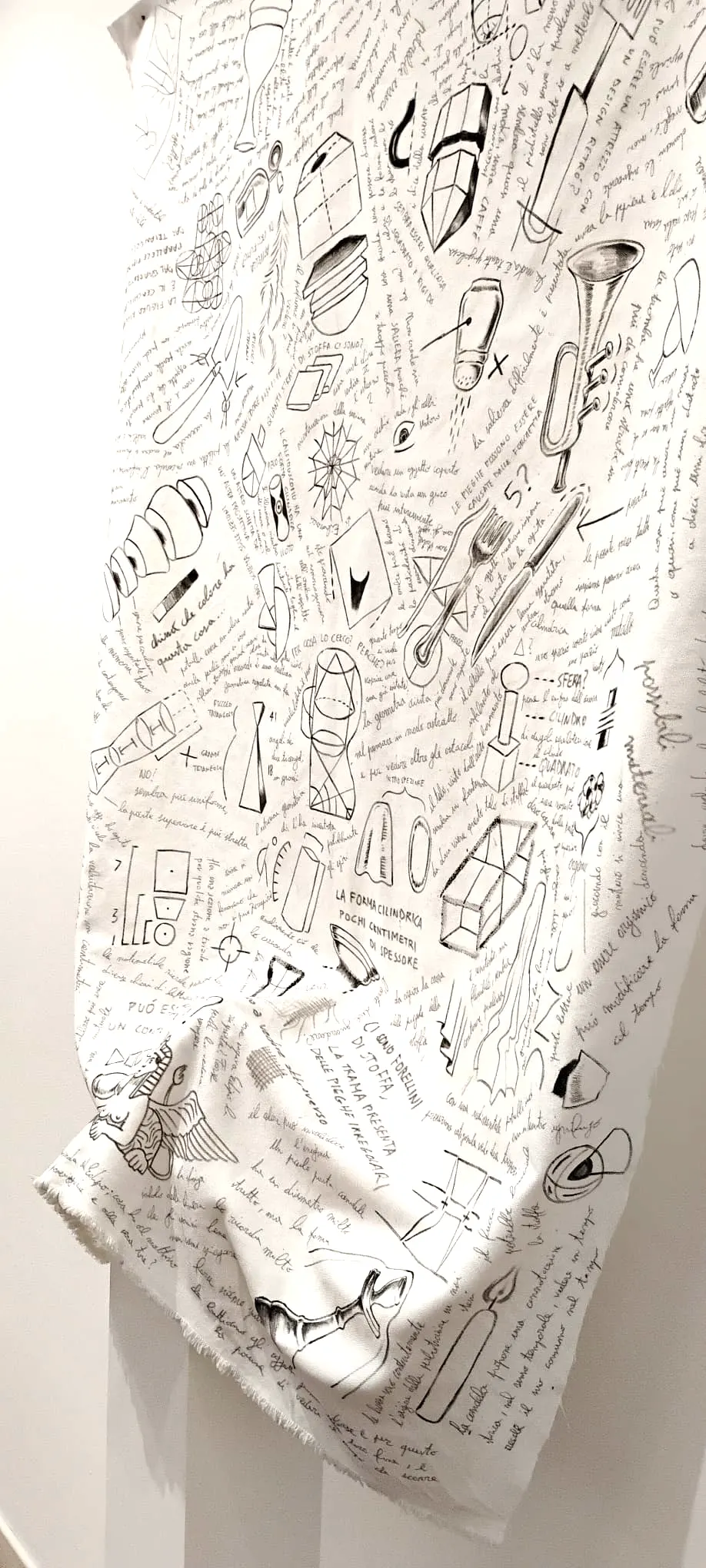
Canvases rich in text and speculation transform everyday objects and rooms — the kitchen, bedroom, living room — into ever-changing works of art. Every corner of the home is open to perpetual reinterpretation.
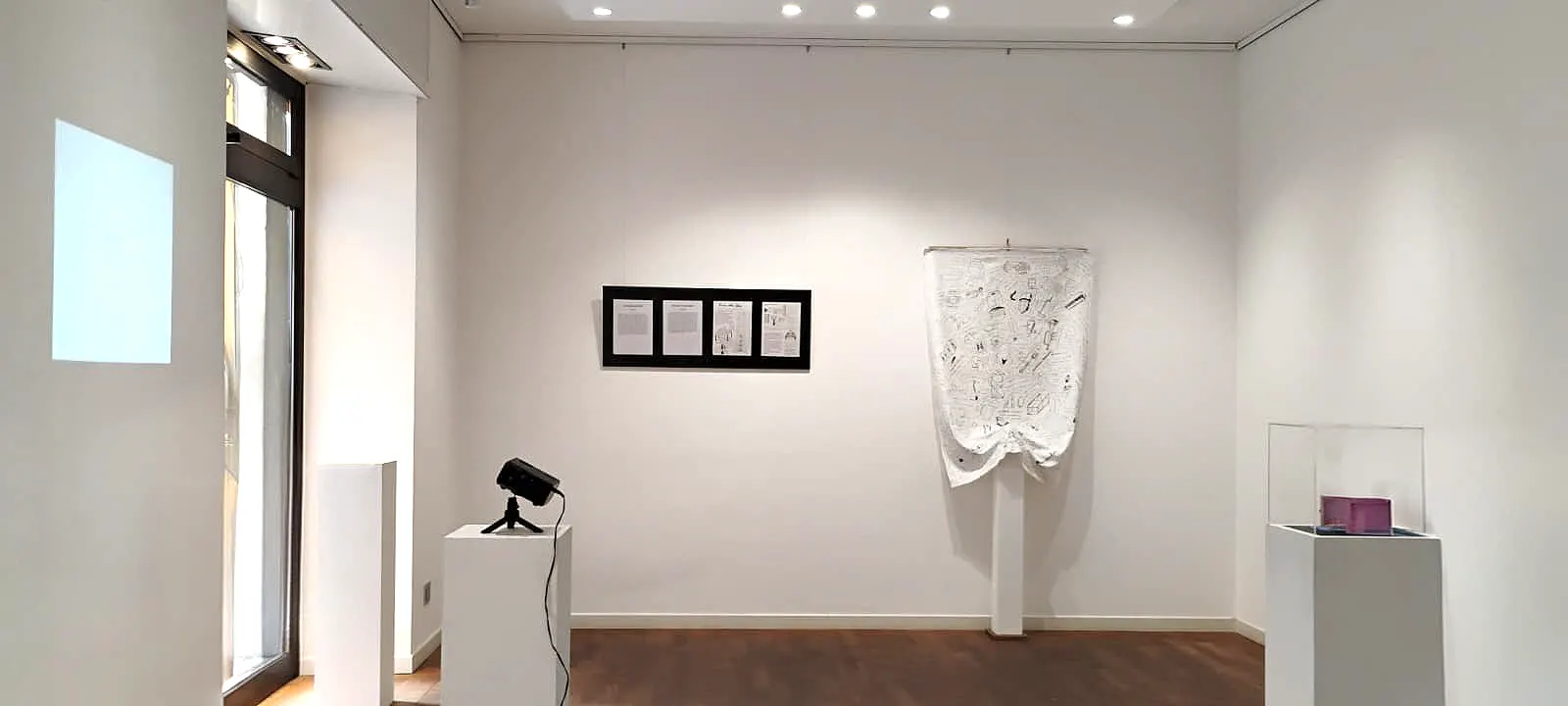
HOUSE OF THE SPHINX
A room is made up of various objects that define it.
What happens if we cover these representative objects with cloths and fabrics?
In this new concept of a room, the narrative is shaped by the people who try to identify a covered object until they understand its function and use it for its true purpose. The idea of a home to be explored also encompasses the home we already inhabit, in every piece of furniture and everyday object.
The question of what lies within a home stems from a curiosity not to underestimate what we need within our own four walls. Indeed, the House of the Sphinx is made up of cloths covered in writings and conjectures about what they conceal; these are important for understanding that we have no certainty as to what is precious to us.
Creativity manages to re-evaluate and transform every aspect of living into art, rendering what we call the kitchen, bedroom and living room completely malleable.
This portal of knowledge can be utilised for various functions such as eating, sleeping, and using cloths to cover oneself and dress.
The most important part is knowing oneself and knowing the home in which we live. The sphinx watches over every question posed regarding the construction of different realities.
Just when you think you’ve got a clear idea of what’s in this room, the people who live there change the layout, rearranging the furnishings and seeking new meanings in the objects, realising that their priorities have shifted – or that they still need a sense of stability.
Time is marked out in a different way, and the space becomes charged with stimulating energy.
““In an age of cultural homogenisation and stylistic standardisation, this exhibition dares to suggest that the future of living lies in emotional resonance, adaptability and the power of art to transform everyday life.”
Luca Temolo Dall’Igna — Almach Art Gallery